
Strategic Professional Development Program for Young Researchers
Top Runner Development Program Engaging Universities,
National Labs, and Companies
Strategic Professional Development Program for Young Researchers
Top Runner Development Program Engaging Universities,
National Labs, and Companies
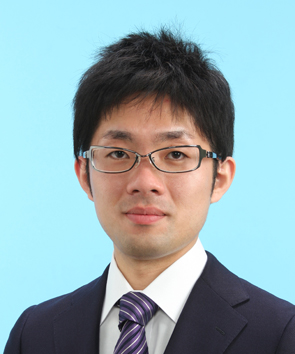
Assistant Professor
Department of Materials Science Institute of Pure and Applied Sciences
University of Tsukuba
(1) Education
2006 April to 2010 March, Bachelor (Supervisor, Porf. Mitsuo Sawamoto)
Undergraduate School of Industrial Chemistry, Faculty of Engineering, Kyoto University
2010 April to 2012 March, Master (Supervisor, Porf. Mitsuo Sawamoto)
Department of Polymer Chemistry, Graduate School of Engineering, Kyoto University
2013 October to 2013 December, Visiting Graduate Student (Supervisor, Porf. Heather D. Maynard)
Department of Chemistry and Biochemistry, University of California Los Angeles (UCLA)
2012 April to 2015 march, Ph.D. (Supervisor, Porf. Mitsuo Sawamoto)
Department of Polymer Chemistry, Graduate School of Engineering, Kyoto University
(2) Carrier
2012 April to 2015 March, Research Fellowship for Young Scientists, JSPS(DC1)
Department of Polymer Chemistry, Graduate School of Engineering, Kyoto University
2015 April to 2017 March Program- Specific Fellow
JST-ERATO Akiyoshi BioNano Transporter
2017 April to 2018 March, Research Fellow
Department of Polymer Chemistry, Graduate School of Engineering, Kyoto University
2018 April to 2020 February, Research Assistant Professor
Department of Applied Chemistry and Bioengineering, Graduate School of Engineering, Osaka City University
2020 March to present, Assistant Professor
Department of Materials Sciences, Institute of Pure and Applied Sciences, University of Tsukuba
The fellow tries to develop polymer drugs, focusing on oxidative stress induced by a large amount of reactive oxygen species (ROS). This is because small molecular antioxidants such as N-acetyl-L-cysteine (NAC) have not been approved as medical drugs. They immediately diffuse after the administration and are taken up even by healthy cells. Then, small molecular antioxidants excessively reduce ROS, resulting in the adverse effects. We developed amphiphilic block copolymers composed of poly(ethylene glycol) and poly(cysteine) whose sulfanyl groups were protected by hydrophobic moieties. These block copolymers self-assembled into spherical polymer micelles (NanoCys) under the aqueous condition. In general, nanoparticles can escape from cellular uptake by healthy cells. Therefore, NanoCys significantly suppressed the adverse effects of hydrophobic cysteine. After oral administration of NanoCys, NanoCys accumulates into intestinal mucosa and release of cysteine by enzymatic hydrolysis. Indeed, NanoCys exhibited the therapeutic effects on xenograft and MASH model mice, compared with low molecular weight drugs. In this research, the fellow will develop NanoCys for acute diseases such as acute liver injury.
The fellow seeks to proactively address unprecedented challenges that arise beyond academic disciplines and national borders, rather than confining himself to his area of expertise, with the ultimate goal of establishing new interdisciplinary fields.
In Preparation.