
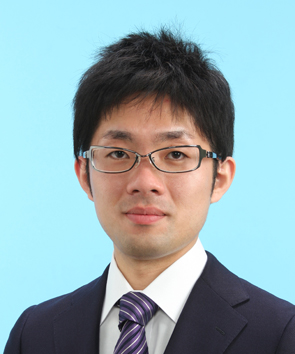
筑波大学
数理物質系
助教
Assistant Professor
Institute of Pure and Applied Sciences
University of Tsukuba
①学歴
2006年4月 京都大学工学部工業化学科 入学
2010年3月 京都大学工学部工業化学科 卒業
2010年4月 京都大学大学院工学研究科高分子化学専攻修士課程 入学
2012年3月 京都大学大学院工学研究科高分子化学専攻修士課程 修了
2012年4月 京都大学大学院工学研究科高分子化学専攻博士後期課程 入学
2015年3月 京都大学大学院工学研究科高分子化学専攻博士後期課程 修了
②職歴
2012年4月–2015年3月 日本学術振興会特別研究員(DC1)
2015年4月–2017年3月 JST-ERATO秋吉バイオナノトランスポータープロジェクト 特定研究員
2017年4月–2018年3月 京都大学大学院工学研究科高分子化学専攻 研究員
2018年4月–2020年2月 大阪市立大学大学院工学研究科化学生物系専攻 特任助教
2020年3月–現在 筑波大学数理物質系物質工学域 助教
(1) Education
2006 April to 2010 March, Bachelor (Supervisor, Porf. Mitsuo Sawamoto)
Undergraduate School of Industrial Chemistry, Faculty of Engineering, Kyoto University
2010 April to 2012 March, Master (Supervisor, Porf. Mitsuo Sawamoto)
Department of Polymer Chemistry, Graduate School of Engineering, Kyoto University
2013 October to 2013 December, Visiting Graduate Student (Supervisor, Porf. Heather D. Maynard)
Department of Chemistry and Biochemistry, University of California Los Angeles (UCLA)
2012 April to 2015 march, Ph.D. (Supervisor, Porf. Mitsuo Sawamoto)
Department of Polymer Chemistry, Graduate School of Engineering, Kyoto University
(2) Carrier
2012 April to 2015 March, Research Fellowship for Young Scientists, JSPS(DC1)
Department of Polymer Chemistry, Graduate School of Engineering, Kyoto University
2015 April to 2017 March Program- Specific Fellow
JST-ERATO Akiyoshi BioNano Transporter
2017 April to 2018 March, Research Fellow
Department of Polymer Chemistry, Graduate School of Engineering, Kyoto University
2018 April to 2020 February, Research Assistant Professor
Department of Applied Chemistry and Bioengineering, Graduate School of Engineering, Osaka City University
2020 March to present, Assistant Professor
Department of Materials Sciences, Institute of Pure and Applied Sciences, University of Tsukuba
これまで、大過剰の活性酸素種(ROS)により惹起される酸化ストレスに着目し、重症化抑制薬を開発してきた。N-アセチルシステイン(NAC)などの低分子抗酸化薬が治療薬として期待されたが、実用化に至っていない。低分子抗酸化薬は、投与後瞬時に拡散し、正常細胞にまで取り込まれて、細胞の恒常性維持に必要なROSも除去するため、致死的な副作用が容易に生じるからである。我々は、生体適合性が認められたポリエチレングリコール(PEG)に疎水化ポリシステイン(PCysR; R, 疎水基)を共有結合で直接連結したブロック共重合体(PEG-b–PCysR)を開発した。本共重合体は水中で自発的に会合し、高分子ミセル型のナノ粒子(NanoCysR)を形成する。一般的にナノ粒子は正常細胞への取り込みが抑制されるため、NanoCysRは疎水化システインの強い毒性をほぼ完全に抑制できる。このナノ粒子を経口投与すると、ナノ粒子は腸粘膜上に集積し、内在性酵素による生分解を受けてシステイン(Cys)を徐放する。実際に、これまでに担がん、代謝機能障害関連脂肪肝炎(MASH)マウスモデルで低分子よりも有意な治療効果を示してきた。本研究では、難治性疾患の内、急性肝障害などの急性疾患に対応可能な高分子創薬設計基盤の確立を目指す。
The fellow tries to develop polymer drugs, focusing on oxidative stress induced by a large amount of reactive oxygen species (ROS). This is because small molecular antioxidants such as N-acetyl-L-cysteine (NAC) have not been approved as medical drugs. They immediately diffuse after the administration and are taken up even by healthy cells. Then, small molecular antioxidants excessively reduce ROS, resulting in the adverse effects. We developed amphiphilic block copolymers composed of poly(ethylene glycol) and poly(cysteine) whose sulfanyl groups were protected by hydrophobic moieties. These block copolymers self-assembled into spherical polymer micelles (NanoCys) under the aqueous condition. In general, nanoparticles can escape from cellular uptake by healthy cells. Therefore, NanoCys significantly suppressed the adverse effects of hydrophobic cysteine. After oral administration of NanoCys, NanoCys accumulates into intestinal mucosa and release of cysteine by enzymatic hydrolysis. Indeed, NanoCys exhibited the therapeutic effects on xenograft and MASH model mice, compared with low molecular weight drugs. In this research, the fellow will develop NanoCys for acute diseases such as acute liver injury.
自身の得意とする分野に留まらずに、分野や国境の垣根を越えて見えてくる未知や課題に積極的にアプローチし、新しい学際領域の創成を目指します。
The fellow seeks to proactively address unprecedented challenges that arise beyond academic disciplines and national borders, rather than confining himself to his area of expertise, with the ultimate goal of establishing new interdisciplinary fields.