

お茶の水女子大学
基幹研究院人間科学系
講師
Lecturer
Human Science Division, Faculty of Core Research
Ochanomizu University
2016年4月〜2018年3月 大阪大学大学院言語文化研究科 言語文化専攻博士前期課程 修了
2018年4月〜2021年3月 大阪大学大学院言語文化研究科 言語文化専攻博士後期課程 修了
2021年4月〜2023年3月 大阪大学大学院人間科学研究科 附属未来共創センター 特任助教
2023年4月〜2026年3月 お茶の水女子大学 基幹研究院人文科学系 講師
2026年4月〜現在 お茶の水女子大学 基幹研究院人間科学系 講師
April 2016 – March 2018 Master’s Program, Studies in Language and Culture, Graduate School of Language and Culture, Osaka University
April 2018 – March 2021 Doctoral Program, Studies in Language and Culture, Graduate School of Language and Culture, Osaka University
April 2021 – March 2023 Specially Appointed Assistant Professor, Center for Collaborative Future Creation, Graduate School of Human Sciences, Osaka University
April 2023 – March 2026 Lecturer, Faculty of Core Research, Humanities Division, Ochanomizu University
April 2026 – Present Lecturer, Faculty of Core Research, Human Sciences Division, Ochanomizu University
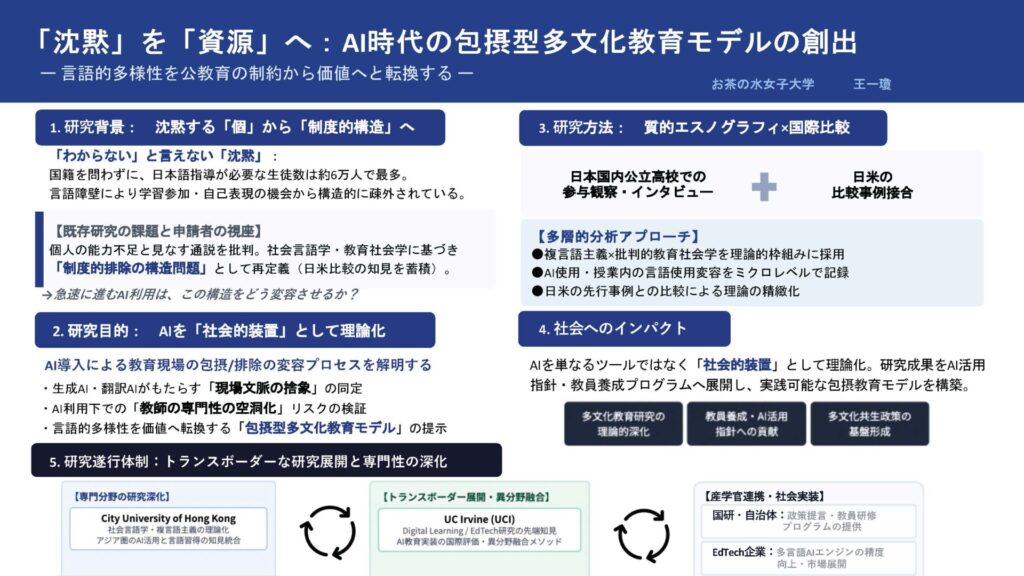
本研究は、日本の公教育において言語的多様性をもつ児童生徒が「わからない」と言えないまま沈黙し、学習参加や自己表現の機会から構造的に排除されている状況に着目する。生成AI・翻訳AIの導入を単なる支援ツールではなく「社会的装置」と捉え、日本国内の公立高校での参与観察・インタビューや、他国・地域との比較を組み合わせ、AIが教師の専門性、教室内の言語使用、包摂/排除の構造をいかに変容させるかを質的に解明する。多言語主義・批判的教育社会学を理論的基盤とし、教師の専門性の空洞化や現場文脈との不整合といったリスクも検証する。最終的に、言語的多様性を価値へ転換する包摂型多文化教育モデルを提示し、AI活用指針、教員養成、教育政策へ接続する。
This study focuses on students with diverse language backgrounds in Japanese public schools who may remain silent because they cannot easily say, “I don’t understand.” As a result, they are not simply facing individual language difficulties but are structurally excluded from opportunities to participate in learning and express themselves within the school system. The study views generative AI and translation AI not simply as support tools, but as “social devices” that may change classroom relationships and educational practices. Through classroom observation and interviews in Japanese public high schools, combined with comparisons with other countries and regions, the research examines how AI affects teachers’ professional roles, language use in classrooms, and structures of inclusion and exclusion. It also considers possible risks, such as over-reliance on AI and a mismatch between AI tools and actual classroom needs. The final goal is to develop an inclusive multicultural education model that turns linguistic diversity into a valuable educational resource and contributes to AI guidelines, teacher training, and education policy.
私が目指すトランスボーダー研究者とは、言語や文化、国境、そして研究と学校現場の壁を越え、多様な背景をもつ子どもたちの学びを支える研究者です。AIなどのテクノロジーを活用し、言語の違いを学びの障壁ではなく、互いを理解し学び合う力へと変え、すべての子どもが自分の言葉で学び、表現し、可能性を伸ばせる包摂的な教育の実現を目指します。
My goal is to become a transborder researcher who crosses the boundaries of language, culture, national borders, and the gap between academic research and school practices to support the learning of students with diverse backgrounds. By using technologies such as AI, I aim to transform language differences from barriers to learning into opportunities for mutual understanding and learning from one another. Ultimately, I hope to contribute to an inclusive education system in which every student can learn and express themselves in their own words and fully develop their potential.
準備中です。